Showing posts with label Hollywood. Show all posts

Thursday, July 7, 2016

Day 327: Golden Holocaust


Cigarettes are one of the most carefully designed small objects on the planet. But it was not an easy thing to get people to smoke. To make smoking as ordinary as, say, eating carrots or drinking orange juice, you needed an elaborate marketing and promoting apparatus, the likes of which the world had never seen. People also had to learn how to smoke. And while this is easy enough in a world of ubiquitous smoking peers and visual models (just look at today’s Hollywood films), there was a time when people had to be taught how to smoke. In the 1930s the American Tobacco Company organized classes for such purposes, directed principally at women. Company reps used dolls to demonstrate the proper way of holding, lighting, and smoking a cigarette, and some of these manikins can be found on display in tobacco museums. The saturation of film and virtually every other medium with smoking has to be seen in this light: smoking had to be made socially acceptable, and huge budgets were devoted to this cause.

Anthropologists like to talk about “material culture,” meaning the diverse ways physical objects are built into the daily life of a people. The material culture of smoking has a long and complex history, appreciated best perhaps by the collectors of tobacciana, comprising the endless variety of pipes, cards, silks, lighters, humidors, matchbooks and cigar boxes, wooden Indians, tobacco tins, posters, advertisements, and other paraphernalia that now fill the world’s (mostly industry-run) tobacco museums. Collectors prize the well-made meerschaum pipe, the lighter carved in a World War I trench, the agate snuff box cut for the European aristocrat, the minstrel-era matchbox or tobacco tin.

But cigarettes have been built into life in many other ways. The front shirt pocket that now adorns the dress of virtually every American male, for example, was born from an effort to make a place to park your cigarette pack. Alternate uses of course have become common—just as we now plug electronic devices into holes once meant for lighters—but the fossil function testifies to the intrusive power of the cigarette and to how easily we overlook the origins of everyday objects. There are many other examples. Germans still talk about male formal wear as a “Smoking” (jacket), and in many parts of Europe you get your newspaper from “Le Tabac.” My vote for the creepiest goes to the U.S. military, which in the wake of the Korean War outfitted war-wounded veterans with artificial arms housing built-in cigarette lighters.

VENDING MACHINES AND ASHTRAYS

Vending machines may already seem like an anachronism, but for more than sixty years they were a prime source of cigarettes in the United States, especially for young people, who could get their fix of sticks in perfect anonymity by simply dropping in a few coins. Early vending machines dispensed gum and other novelties—the Oxford English Dictionary (OED) gives 1895 as the first known use of the expression—but prior even to its breakup in 1911 American Tobacco owned a controlling share in the Garson Vending Machine Company, part of its effort to control all links in the cigar and cigarette supply chain. Patents for the automatic dispensing of cigarettes and cigars date from the 1880s, but serious exploitation of such devices doesn’t really begin until after the First World War, when skyrocketing consumption and standardization of packaging led to new commercial opportunities. An American by the name of William Rowe invented an improved cigarette vending machine in 1926, and by 1938 the Rowe Cigarette Service Company of New York was operating 14,000 dispensers in twenty-two U.S. cities. Coin-operated sales grew steadily up through the late 1970s, when 875,000 machines in the United States were bringing in $2.7 billion in annual cigarette business. This was an effective way to move product, and companies paid a premium to place their brands in favored spots inside the machines (center column was best) and in high-traffic areas of a store or a city. Nothing was left to chance; the industry’s archives preserve detailed calculations of how placement or on-the-machine advertising would affect sales. Cigarette companies also paid for lobbyists to defend such machines when efforts arose to have them banned.

Vending machines were often criticized for making it too easy for children to get cigarettes, and in 1988 Surgeon General C. Everett Koop urged a ban on all such devices. Trade associations fought back, with the Amusement and Music Operators Association distributing brochures with titles like “A Responsible Program for Cigarette Vending Machines,” recommending ways to block youth access. The whole point of these machines was to automate sales, however, which is why kids were so easily enticed. A number of U.S. states enacted bans in the 1990s, though automated cigarette dispensers remain legal in many parts of the world. Japan may have more than any other nation and has come up with some high-tech—and ridiculous—ways to bar access from underaged smokers, such as optical scans and software for detecting facial wrinkles. Clever teens can apparently game the system by simply making a contorted face.
Ashtrays are another example of the insinuation of cigarettes into everyday life. It is hard to imagine a world without, but ashtrays were not a common part of life until about a century ago. The word we most often use (and spell) did not even exist: until the twentieth century ash-tray was typically spelled as either two separate words or a hyphenated compound, and the OED records the first single-word spelling (with no hyphen) in 1926.

Louis Kyriakoudes, director of the Oral History Project at the University of Southern Mississippi, has shown that cigarette makers spent a great deal of time and effort getting ashtrays into American consumer products. Automakers were cajoled into putting one into every car, and anyone who flew in a commercial plane in the 1960s, 1970s, or 1980s will remember ashtrays in the armrests of their seats—later stuffed with trash or gum after the smoking bans of the 1990s. Ashtrays were ubiquitous in offices and restaurants, hospitals and doctors’ offices, trains and taxis, and for a time it was hard to get very far from one without hiking into the woods. Movie theaters and university lecture halls had ashtrays built into the seats, and ashtrays were built into barber chairs. I have seen (Japanese-made) slot machines with built-in ashtrays and “smokeless” ashtrays powered by batteries or USB cables. Bridge tables had clip-on ashtrays, and Kyriakoudes tells how Edward Bernays, the marketing genius for American Tobacco, approached furniture makers in the 1930s to get them to build ashtrays into kitchen cabinets. Designers threw themselves into the art, fashioning ashtrays in the shapes of pianos, shoes, turtles, toilets, tires, and naked ladies. I have seen ashtrays celebrating Walt Disney World, Penn Central Station, the 1980 Olympics, and every state in the Union.

My all-time favorite, though, is the ashtray built into the U.S. military’s SAGE computer, a digital brain behemoth designed in the 1950s to protect U.S. airspace against a Soviet nuclear attack. SAGE—Semi-Automatic Ground Environment—was the world’s most advanced electronic brain, linking hundreds of radar stations in the United States as “the first large-scale computer communications network.” The charming part of this doomsday machine, now on display at the Computer History Museum in Mountain View, California, is the cigarette lighter and ashtray built into the console, just to the left of the radar screen intended to reveal enemy aircraft or missiles penetrating our airspace. One can imagine these guardians of our national security, stoic in their morbid duties, carefully extinguishing their cigarettes as the world descends into Armageddon . . .

~~Golden Holocaust: Origins of the Cigarette Catastrophe and the Case for Abolition -by- Robert N. Proctor

Wednesday, October 7, 2015

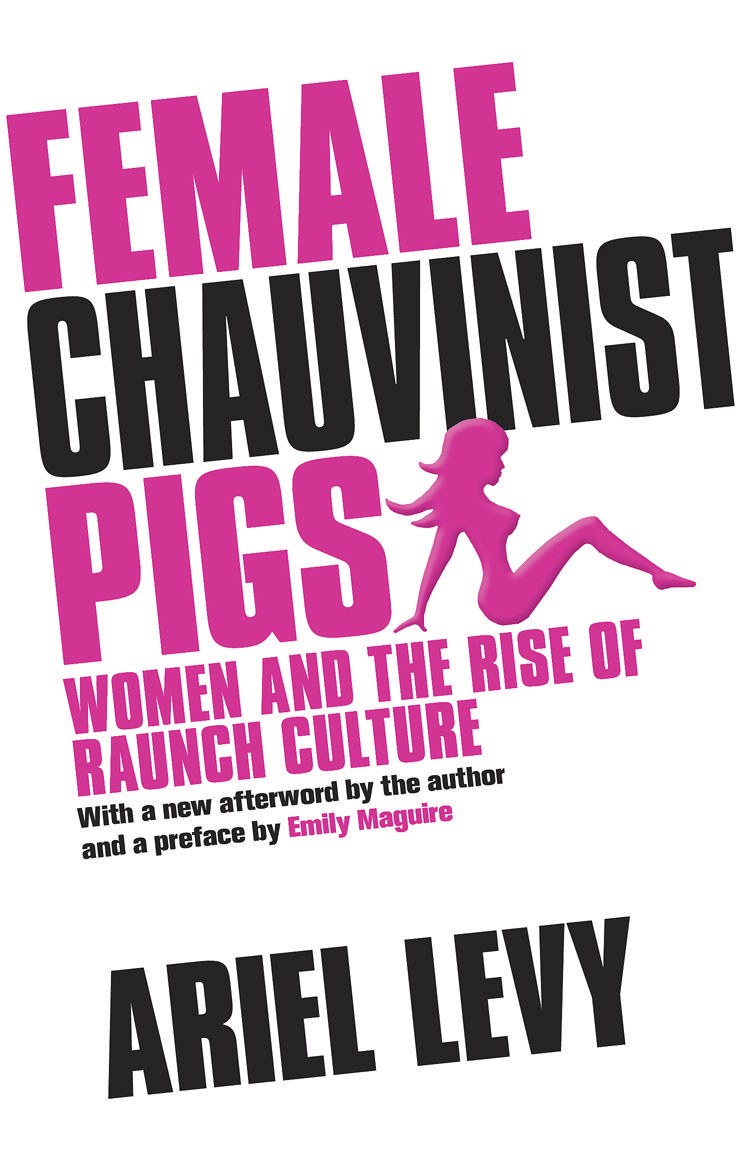
Day 54 : Book Excerpt : Female Chauvinist Pigs

Charlie’s Angels, the film remake of the quintessential jiggle show, opened at number one in 2000 and made $125 million in theaters nationally, reinvigorating the interest of men and women alike in leggy crime fighting. Its stars, who kept talking about “strong women” and “empowerment,” were dressed in alternating soft-porn styles—as massage parlor geishas, dominatrixes, yodeling Heidis in alpine bustiers. (The summer sequel in 2003—in which the Angels’ perilous mission required them to perform stripteases—pulled in another $100 million domestically.) In my own industry, magazines, a porny new genre called the Lad Mag, which included titles like Maxim, FHM, and Stuff, was hitting the stands and becoming a huge success by delivering what Playboy had only occasionally managed to capture: greased celebrities in little scraps of fabric humping the floor.

This didn’t end when I switched off the radio or the television or closed the magazines. I’d walk down the street and see teens and young women—and the occasional wild fifty-year-old—wearing jeans cut so low they exposed what came to be known as butt cleavage paired with miniature tops that showed off breast implants and pierced navels alike. Sometimes, in case the overall message of the outfit was too subtle, the shirts would be emblazoned with the Playboy bunny or say PORN STAR across the chest.

Some odd things were happening in my social life, too. People I knew (female people) liked going to strip clubs (female strippers). It was sexy and fun, they explained; it was liberating and rebellious. My best friend from college, who used to go to Take Back the Night marches on campus, had become captivated by porn stars. She would point them out to me in music videos and watch their (topless) interviews on Howard Stern. As for me, I wasn’t going to strip clubs or buying Hustler T-shirts, but I was starting to show signs of impact all the same. It had only been a few years since I’d graduated from Wesleyan University, a place where you could pretty much get expelled for saying “girl” instead of “woman,” but somewhere along the line I’d started saying “chick.” And, like most chicks I knew, I’d taken to wearing thongs.

What was going on?
...
What was almost more surprising than the change itself were the responses I got when I started interviewing the men and—often—women who edit magazines like Maxim and make programs like The Man Show and Girls Gone Wild. This new raunch culture didn’t mark the death of feminism, they told me; it was evidence that the feminist project had already been achieved. We’d earned the right to look at Playboy; we were empowered enough to get Brazilian bikini waxes. Women had come so far, I learned, we no longer needed to worry about objectification or misogyny. Instead, it was time for us to join the frat party of pop culture, where men had been enjoying themselves all along. If Male Chauvinist Pigs were men who regarded women as pieces of meat, we would outdo them and be Female Chauvinist Pigs: women who make sex objects of other women and of ourselves.

When I asked female viewers and readers what they got out of raunch culture, I heard similar things about empowering miniskirts and feminist strippers, and so on, but I also heard something else. They wanted to be “one of the guys”; they hoped to be experienced “like a man.” Going to strip clubs or talking about porn stars was a way of showing themselves and the men around them that they weren’t “prissy little women” or “girly-girls.” Besides, they told me, it was all in fun, all tongue-in-cheek, and for me to regard this bacchanal as problematic would be old-school and uncool.

I tried to get with the program, but I could never make the argument add up in my head. How is resurrecting every stereotype of female sexuality that feminism endeavored to banish good for women? Why is laboring to look like Pamela Anderson empowering? And how is imitating a stripper or a porn star—a woman whose job is to imitate arousal in the first place—going to render us sexually liberated?

Despite the rising power of Evangelical Christianity and the political right in the United States, this trend has only grown more extreme and more pervasive in the years that have passed since I first became aware of it. A tawdry, tarty, cartoonlike version of female sexuality has become so ubiquitous, it no longer seems particular. What we once regarded as a kind of sexual expression we now view as sexuality. As former adult film star Traci Lords put it to a reporter a few days before her memoir hit the best-seller list in 2003, “When I was in porn, it was like a back-alley thing. Now it’s everywhere.” Spectacles of naked ladies have moved from seedy side streets to center stage, where everyone—men and women—can watch them in broad daylight. Playboy and its ilk are being “embraced by young women in a curious way in a postfeminist world,” to borrow the words of Hugh Hefner.

But just because we are post doesn’t automatically mean we are feminists. There is a widespread assumption that simply because my generation of women has the good fortune to live in a world touched by the feminist movement, that means everything we do is magically imbued with its agenda. It doesn’t work that way. “Raunchy” and “liberated” are not synonyms. It is worth asking ourselves if this bawdy world of boobs and gams we have resurrected reflects how far we’ve come, or how far we have left to go.

~~Female Chauvinist Pigs: Women and The Rise of Raunch Culture -by- Ariel Levy

Sunday, September 27, 2015

Day 44 : Representing Political Regimes in the Shrek Trilogy -Aurélie Lacassagne

The trilogy Shrek has been among the most successful animated movies at the box office in the history of cinema. DreamWorks, the production company, decided to make the green ogre a worldwide cultural product, by designing hundreds of products related to the monster. The profits of the franchise are estimated at 1.4 billion dollars (“Interview,” 2007). Just the first movie, Shrek, made a total box office of 479.2 million dollars (Hopkins, 2004: p. 33). This fact could clearly lead to insights pertaining to the political economy of film. This chapter, however, will focus on the narratives of the movies. We are interested in these narratives (in our case visual representations) and their interplay with power politics, especially race and gender conflicts. Insofar as movies constitute partly social reality, how can we interpret these visual texts? Our contention is that popular culture, including children’s movies, constitutes and represents the social world. Therefore, proposing an interpretation of these movies as texts also offers an interpretation and a representation of the world. Children (and in our case adults also) are more than just socialized by movies; the films as texts directly affect their representation of the world and participate in the constitution of the social world. As the early writers on cultural studies, such as Hall (1997), showed, popular culture is a site of struggles between the hegemonic discourse and resistance to it. The immanent divisions of our capitalist societies (in terms of class, race, and gender) are, at the same time, produced, reproduced, and contested through popular culture.
...
The narratives being very rich, we will focus on representations of political regimes. Indeed, the movie series depicts a number of regime types: a liberal capitalist democracy, in the form of Far Far Away; totalitarianism as instantiated in the Kingdom of Farquaad; and finally, an individualist anarchist space— Shrek’s swamp. All of these regimes are disrupted by rebellions led by groups excluded from the established social order. The three political regimes identified are all territorially based. The space is segregated into an inside and an outside. This spatial segregation is associated with a social segregation. In international relations literature, Andrew Linklater (1990) speaks about this “tension” between “men” and “citizens.” Citizens of a particular spatially defined political community are entitled to specific rights, while outsiders are deprived of those very rights. But even within the community of citizens, appears the logic of “established” and “outsiders,” to speak in Eliasian terms (Elias and Scotson, 1994). This logic often relies upon exclusion based on perceptions of gender, race, class, ethnicity, and bodies. This chapter explores how these logics of exclusion are constructed. It is divided into three sections, each describing a particular political regime.

Individual Anarchism

The first few scenes of the first movie, Shrek, open with the ogre living by himself in his swamp. The space is clearly delimited by the “décor” of the swamp; but the ogre goes further and territorially marks his space with signs to signify to the others that this territory belongs to him and that no one can trespass. Two images can come to one’s mind while watching this scene. First, the absence of authority: Shrek lives alone in his swamp and he is the sole master of his life. It refers to individualist anarchism. Second, for anyone familiar with French literature and political philosophy, Shrek evokes images of the myth of le bon sauvage (the noble savage) depicted by Montaigne (1595/1960) in his Essays and Rousseau (1754/1983) in his Discourse on the Origin of Inequality Among Men.

Individualist anarchism encompasses various conceptions. It is not the point here to refer to a particular conception of this philosophy but to make the point that, Shrek living in his swamp matches with the spirit of individualist anarchism. There is no state, no society. Nothing seems to prevent Shrek from fulfilling his self-interest. Shrek also appears very reluctant to engage in any form of social relations. One can say that he is an egoist. He represents more the tradition of Max Stirner than William Godwin. Shrek looks fully in control of himself—of his mind and body. Even if one can see a sort of melancholia, he seems satisfied and happy, enjoying the calm of his swamp and the easiness of his life. He eats whatever he finds around him and has arranged his shelter to his taste. He does not appear to have intellectual or spiritual concerns. As long as he can live alone in his swamp, he fully accepts the body he has; his physical appearance becomes an issue only when he enters into social transactions. These control and acceptance of his body are two key elements for the story itself as well as for his portrayal as an egoistic individualist anarchist.

~~Investigating Shrek- Power, Identity, and Ideology -eds.- Aurélie Lacassagne, Tim Nieguth, and François Dépelteau

Saturday, September 26, 2015

Day 43 : Essay Excerpt : A Fistful of Yojimbo

There are many ways to read the relationship between a film and its remake: in terms of fidelity, imitation, plagiarism, appropriation, or other enactments of power. For the most part, such models rely on a binary system to analyse the relationship between two films in isolation from their surroundings. In this chapter I wish to examine such a relationship in terms of a wider model of understanding, based on possibilities of dialogue with a wider film genre. The case study will be the relationship between Akira Kurosawa’s film Yojimbo (Yojimbo 1961) and Sergio Leone’s remake, A Fistful of Dollars (Per un Pugno di Dollari 1964). The two films themselves are very well known. Akira Kurosawa (1910–1998) made Yojimbo because he had always wanted to make a movie in the Western genre after the style of John Ford, whose movies he had seen as a child. Sergio Leone (1929–1989) was electrified by Yojimbo and made his own version starring Clint East wood, a relative unknown. Both films broke box-office records, inspired sequels and made huge stars of their main actors, Toshiro Mifune and Eastwood. As we shall see later in this chapter, Leone’s film has been credited with single-handedly creating a new genre in European cinema, the ‘Spaghetti Western’. Taken individually, these films had a massive impact on the Japanese and Italian film industries respectively. Both have been critically examined in terms of this impact, but, surprisingly, they are hardly ever discussed in relation to each other. When they are, critics focus on the fact that although Leone’s film was extremely close to Kurosawa’s, he failed to credit Kurosawa on the screen titles, giving rise to charges of plagiarism (Galbraith 2001: 311); or, alternately, to analyses that compare the scripts to see how different Leone’s film was from the original (Frayling 1998: 148–150). The main approaches to the films so far have thus taken the form of ‘fidelity discourse’.

Examining the plot, both films tell the story of a nameless hero who arrives in a town being torn apart by the power struggles between two rival gangs. This so-called ‘hero’ decides to amuse himself and cause some trouble, hiring himself out to the highest bidder as a bodyguard. Both films derive humour from the mannerisms of the hero – Mifune’s ronin, or masterless samurai, far from being a noble warrior, spends all his time scratching, cursing and stuffing himself with rice and saké, while Eastwood’s cowboy smokes constantly, falls asleep instantly and hardly speaks for the duration of the film. Both men are only out for money. Both redeem themselves in a side plot, saving a young woman and returning her to her family, but the films escalate into an apocalypse of violence and death, ending with dust and smoke swirling around the empty streets of what is now a ghost town. Leone’s film reprises the same story, characters and even dialogue as Kurosawa’s film. One cannot deny that the two films are very close. However, in this chapter I wish to get away from fidelity discourse and find some way of analysing these two films that will give us a broader understanding of the relationship between them, as well as a better understanding of their combined impact on the Hollywood Western genre.  
...
Both Kurosawa and Leone were innovative in their use and depiction of violence, breaking with the conventions of Japanese jidaigeki (historical costume drama) and the Hollywood Western. In terms of camerawork, Kurosawa and Leone employed existing techniques but played upon convention to produce startling results, many of which have since become staples of the Western genre.

For both the domestic and international audience, perhaps the most influential scenes in Yojimbo were the images of violence: the dog trot ting past with a human hand in its mouth; a severed arm lying on the ground; Unosuke, the villain, lying in a pool of his own blood. Before 1961, blood on the Japanese screen had been the preserve of horror movies, not jidaigeki. After Yojimbo, fights which had previously  been choreographed to the last detail now took on the unpredictable and explosive action of Toshiro Mifune. Nishimura argues that Mifune’s instantaneous explosions of violence had so much impact not only because they were so different to the choreography of chambara swordplay movies, but also because the primary effect for the spectator was one of powerful, emotional catharsis (Nishimura 2000: 116). However, Japanese directors were more captivated by the violence itself than its emotional effects. Japanese cinema became even more bloody after the sequel to Yojimbo, Sanjuro (Sanjuro 1962), featured a geyser of blood erupting from the villain’s chest. Such graphic violence influenced jidaigeki to the extent that it degenerated into the zankoku eiga or ‘cruel film’ genre, seen in many Toei  ̄and Toho productions of 1962–1963 (Nishimura 2000: 117–118; Yoshimoto 2000: 290–291). Yojimbo opened in art-house cinemas in the United States in 1962 to mixed reviews. Seneca International picked it up for wider distribution, adding English subtitles and later releasing a dubbed version. The same violence which so influenced Japanese jidaigeki made a great impact on Hollywood directors. However, Hollywood was not shocked by the blood in Yojimbo so much as impressed by Kurosawa’s intelligent hand ling of violence. Arthur Penn later used Kurosawa’s technique of inter spersing slow motion with normal speed by using multicamera filming to achieve the climactic violent ending of Bonnie and Clyde (1967). It may be argued that the impact of Kurosawa’s violence on Hollywood was the exact opposite of its impact on jidaigeki, as American directors were more interested in the emotional effects. Kurosawa’s beautiful and shocking images stay in the mind because they emphasise the horror of the brutality behind them. Leone’s film was also violent for the time, featuring more blood and realistic death throes than would be expected from either the Hollywood or European Western. By the time that audi ences had seen both Yojimbo and A Fistful of Dollars, other directors were also attempting more realistic gunfights, although few were to attempt the scale of Leone’s massacre by the river. While Leone also used the shock of explosive action, his fight scenes were effected differently: the unbearable tension of the drawn-out standoff was to become a Leone staple and classic feature of the Hollywood Western.


~~Essay - A Fistful of Yojimbo: Appropriation and Dialogue in Japanese Cinema -by- Rachael Hutchinson from the book World Cinema’s ‘Dialogues’ with Hollywood