Showing posts with label society. Show all posts

Thursday, June 16, 2016

Day 306: Noise


One gorgeously warm and sunny August day in 1869, the Scottish-born American naturalist John Muir was wandering among the waterfalls, deep rocky valleys and ancient giant sequoias of the Yosemite National Park in the Californian Sierra Nevada. It was a place he adored. But on this particular day, instead of thoroughly enjoying himself as usual, he was thoroughly distracted, unable to settle or relax. As he explained in his diary the following day, what had troubled him was the way other people who had come to the park had been behaving:

It seems strange that visitors to Yosemite should be so little influenced by its novel grandeur, as if their eyes were bandaged and their ears stopped. Most of those I saw yesterday were looking down as if wholly unconscious of anything going on about them, while the sublime rocks were trembling with the tones of the mighty chanting congregation of waters gathered from all the mountains round about, making music that might draw angels out of heaven.

The birdsong, the ‘wind-music’ of the trees, the ‘joyous hum’ of insects, the ‘glad streams singing their way to the sea’: the sublime wonders of nature were all around, freely available to be seen and heard – perhaps especially to be heard. For as Muir once wrote, so rich in sounds was a park such as Yosemite that ‘even the blind must enjoy these woods’. Yet most visitors – busy catching fish, distracted by each other’s company, driving animals away with their chatter and their mules and horses – simply weren’t able to appreciate them. If only they could be ‘devout, silent, open-eyed, looking and listening with love’, he complained, their lives would surely be so much richer.

John Muir’s call for a ‘devout’ and ‘silent’ form of listening echoed a cry which reverberated right across the nineteenth century: a need for the sublime power of particular sounds to be experienced to their full effect. The pattern was set as the century opened and the Romantics talked up the virtue of listening closely to nature. Samuel Taylor Coleridge wrote of ‘the thunders and howlings of the breaking ice’ one winter’s night on the Lake of Ratzeburg, and how they had convinced him that there were ‘sounds more sublime than any sight can be’. In 1828 William Wordsworth even wrote a whole poem ‘On the Power of Sound’.

In the hands of the Romantics, and in the minds of naturalists such as John Muir, this reverence for close listening usually came across as reasonable, organic, even democratic and liberating, but it also contained the seeds of an attitude to sound that was darker and more authoritarian. In order for the sublime to be appreciated, people everywhere, whether in the countryside or the city, would have to reform their ways. And as the century progressed, it was this darker, controlling side to the art of listening that seemed to take root.

Just a few years after John Muir had written of his experience in California, in Bayreuth in Germany the foundation stones were being laid for the town’s magnificent Festival Theatre opera house. When it was finished in 1876, the Bayreuth theatre established itself as one of the world’s great temples of music and, in particular, as a mecca for those who worshipped the composer Richard Wagner, to whose work it was dedicated. And it really was worship in which they indulged. As Cosima Wagner put it when speaking of her husband’s compositions, ‘Our art – I dare say it – is religion.’ In the nineteenth century, many music aficionados, and not just the Wagnerites, came to regard their art in the same way. Yet, as it turned out, giving music a religious aura came at a price. Its most devoted followers would soon start creating their own dogma about how it should be heard, eventually crushing any behaviour that smacked of heresy. The new art of listening would turn out to be a rather uncomfortable mixture of wonder, politeness and brutal discrimination.

Only a century before, listening to music – even classical music – had been a surprisingly relaxed affair. This was largely because many people were not actually listening at all. Concerts were often held in restaurants. As Peter Gay has shown, even if musicians performed in the mansions and stately homes of the rich, it was often as ‘an agreeable backdrop for flirting, gossiping, dining’, and if they ever got the chance to perform in an opera house, they would still have faced a restless auditorium. There was no firm etiquette about arriving on time or leaving quietly at the end; instead, there was a constant stream of noisy toing and froing. A handful of music-lovers, clutching their librettos, might be conscientiously following the action on stage, but most of the audience would be chatting away throughout the performance, ‘as liveried servants hawked carafes of wine and oranges’ all around them. In the remote reaches of the upper balconies, prostitutes would also be plying their trade.

One could easily imagine the musicians themselves being in utter despair at this hubbub. Yet so used to it were they that silence unsettled them more. When Mozart performed in Vienna in 1781, he wrote to his father about how pleased he was at the screams of ‘bravo’ coming from the audience as he was playing. Orchestras rarely objected to their final bars being covered with shouting and applause. Indeed, usually neither performer nor composer could bear to wait until the very end of a piece before hearing of their audience’s approval: they would have taken silence as a sign of rejection.
Even in the eighteenth century, however, there were stirrings of change. Instead of offering merely a pleasing background entertainment, music was increasingly thought of as something capable of offering a sublime and deeply personal experience. For Charles Burney, who in the late 1770s was just beginning his epic General History of Music, music was – or at least should be – about being moved. Every listener, he wrote, had this right: ‘a right to give way to his feelings, and be pleased or dissatisfied without knowledge, experience, or the fiat of critics’. The critics, of course, continued to be influential in guiding wider public taste, and for many it was Beethoven who promised listeners the most sublime experience of all. The French writer George Sand, for instance, told Liszt of how she herself responded to the German composer’s music: ‘Beethoven makes you enter once again into the most intimate depths of the self; everything you have felt, experienced, your loves, your suffering, your dreams, all are revived by the breath of his genius and throw you into an infinite reverie.’

What, though, did treating music in this reverential way mean for the ‘ordinary’ music listener? A clue can be found in a painting now hanging at the Museo Revoltella in Trieste but which, right at the end of the nineteenth century, became something of an international sensation, travelling from country to country in the form of popular engravings and copies. Lionello Balestrieri’s Beethoven depicts a pianist and a violinist playing in a small, sparsely furnished room to an audience of five people. None of them, it seems, is making a sound or even engaging with the other four. Two men stare intently in the direction of the musicians – though are looking through them rather than at them, as if they’re hardly there; another man leans against a wall on which Beethoven’s death mask hangs, hands in pockets and looking down at the floor; a fourth sits bent forward, head in hands and eyes covered; a woman leans against one of the men, but ignores him as she stares into space, transfixed. These five people do not just remain silent; they are virtually unconscious of the world about them, swept away to the spiritual realm of the infinite. In other words, they are listening as if it were a sacred task.

‘Worshipful silence’ was being depicted on canvas because it was now the ideal form of listening. To reach a state of ecstasy, one needed to establish a direct and pure relationship with the music, and that meant concentrating. Silence wasn’t the same as passivity. It had an intensity to it. It was work. The listener was engaged in a monumental lifelong task of self-realisation and cultural improvement – what the Germans referred to as Bildung. And this meant, of course, that anyone who shattered the silence would be guilty of destroying the purity of the moment upon which this hard task depended. It was certainly acceptable to weep as you listened; indeed, why on earth would you not, given how beautifully a piece of music would evoke the depths of despair or the heights of love? But you needed to weep quietly, to let a tear roll down your cheek rather than wail out loud.

~~Noise: A Human History of Sound and Listening -by- David Hendy

Sunday, May 15, 2016

Day 274: Nomads of Eastern Tibet


My informants unanimously agreed that birth in Zilphukhog was a simple business. They were astonished by the apparent fuss and ado women in their new exile home of Nepal associate with child birth. During much of their pregnancy, women in Zilphukhog performed the normal daily chores, and only weak or under-nourished pregnant women took extra nourishment in the form of milk, tsampa, butter, etc. A quotation from an early 20th century Khampa man might give an inkling of the pre-modern Tibetan view of the casualness of birth: “The Tibetan woman is fortunate above others in accomplishing her childbirth easily. She may go to the mountain for wood and bring back a child in her gown”. This may be a far-fetched statement, but it does give a rough idea of the manner of and attitudes towards childbirth in pre-modern rural Kham. Despite the fact that birth was welcomed, especially the birth of boys, child delivery was considered to be somewhat defiling, thus efforts were made to separate it to a degree from the domestic space.

Delivery in Zilphukhog usually took place in an improvised hut for the well-to-do women, and under a simple shelter for the less well-off women. Yudrug-tsang, Druchung-tsang, Gechung-tsang, and other households of means usually built a dung-hut for the expectant mother in the winter camp, or pitched a small tent in the summer camp. When Sokey’s first child was born while working for Gechung-tsang, she delivered it under a yak wool blanket that was tied to one side of the tent. When she had established an independent household, she delivered her children in the household tent, but she had to cut the umbilical cord herself without her mother’s assistance. Delivering children in the household tent entailed two things: that (a) the family had neither the means nor the necessary manpower to segregate the mother when she delivered children, which in turn necessitated her to overlook the pollution element; and (b), because of (a) the mother could not afford to rest for many days unless she had grown up children who could take care of the family herds.

A dependent woman’s midwife was usually her own mother, and then perhaps only for the first birth, as was the case with Sokey. However, Yudrug-tsang, Gechung-tsang, and other affluent houses had a professional midwife. Such women advised the expectant mother what to do at the delivery, and they cut the umbilical cord and buried the placenta. The baby was rarely washed, but it was cleaned with a piece of soft cloth.

Those women who could afford it remained in bed for about a week to recuperate after delivery. However, they were not allowed to enter the main domestic space of the household tent until five to seven days had passed. On the seventh day, a ritual ceremony was performed by a monk to cleanse or purify the mother and the child from any birth defilement. The ceremony consisted of citing religious formulae and sprinkling tru-chu (khrus chu) or “cleansing-water” on the mother and the child from a silver vase. Now they became unpolluted members of the family. Some months later, the baby was usually taken to a high lama or a trulku (sprul sku)—an incarnate lama—to receive a name. Some fresh butter was applied to the crown of the child’s head which, apparently, was meant to invigorate it. The lama or trulku gave religiously inspired names, such as Chimi (“Immortal”), Sangye (“Buddha”), Tenzin (“Doctrine-Holder”), or Namgyal (“Victorious”) and Dolma (“Saviouress”). The average dependent could not afford to purify and name his child in the above manner. Consequently, many dependents never had lama-given names, and were known instead by the nick names they obtained. For instance, these were names like Shigo (“Birdhead”), Keyga (“Happy”), Pulu (“Round like a ball of butter”), which described the physical features or dispositions of the referent persons. Inviting a lama or going to him not only necessitated presenting a gift or donation, it entailed a break in the routine of domestic production, which dependents were often ill-prepared to do.

When a baby was able to eat solid food, it was given a mixture of tsampa, milk, and butter thrice daily. A mother might also chew tsampa first and then feed it to her child with her index finger. A baby was not weaned until it was approximately 2 or 3 years old. Goat’s milk and curds were given to the child, and he was not given meat, nor was he allowed even to look at it. The rationale behind this was to discourage children from becoming “addicted” to meat, as it was incompatible with the tenets of Buddhism. Although the mother did not use any kind of nappy to dispose of the wastes of the child and keep it dry, a very practical alternative method was employed. She made a triangular or v-shaped felt sleeping bag for her baby. The bag was half-filled with very fine dung-powder on which the child slept or sat. Every time the child soiled the dung-powder, the part that was made wet was taken out and the bag was replenished with fresh dung-powder. Shifting and replenishing the dung-powder aptly ensured that the child did not suffer from sores on its buttock. A well-to-do mother might use soft cloths for the same purpose. The baby’s felt sleeping bag could be moved around according to the mother’s convenience, as she had to be vigilant lest the baby fall out, get trampled by animals, or be suffocated by the pet animals living around the tent, such as dogs or cats. As the baby grew up, it was given more solid food, and when it was able to crawl or walk it was tethered to a rope so that it might not move beyond a given area, which could be dangerous as the mother might often be preoccupied with her daily domestic chores. During seasonal movements between camps, the baby was tucked in a spacious pocket of a gown (paktsag), or loaded on a harmless and hornless yak in a pannier whose weight was counterbalanced by another pannier containing an object of equal weight on the opposite side of the yak saddle.

At the age of five or six, children already began contributing to the household work, as can be seen clearly in figure 19, “Phases of pastoral working life in Zilphukhog”. These very young children were given the task of looking after cheese being dried in the sun, and helping to separate lambs from their mothers at milking time. Grandchildren and grandparents were jointly delegated the task of driving away crows, goats, sheep etc. from cheese and other food products which were being processed around the camp. As children grew bigger, the nature of their work became tougher and they had to become more responsible. In their early adolescence, they no longer dealt with lambs and cheese and instead they herded fully grown ovines such as sheep and goats. Children in their mid-teens were responsible persons who herded the main pastoral livestock, the yak and dri. At the age of 18 or 19 adolescents reached adulthood, which meant that they became marriageable.

Infanticide was not practiced in Zilphukhog. This is understandable in view of the fact that both Yudrug-tsang and the dependents were determined to increase the population. However, a discriminating attitude to the sex of the child was prevalent. The birth of sons was celebrated and that of girls was not equally appreciated. The birth of three, five or seven sons was prestigious and auspicious because the three numbers had religious connotations. The number three is associated with at least two triadic concepts in the Buddhist doctrine. One is the “Three Jewels” or Konchok Sum, which refers to the Buddha, his teachings known as the Dharma, and the Sangha or monastic community. The second derives from the Buddhist pantheon where three patron deities or gompo (mgon po) are identified together as a set, being Chenrezig, Chagna Dorjee, and Jambeyang, and collectively called Rigsum Gompo, meaning the “Three Protectors”, or more literally, “Lords of the Three [Buddha] Families”). The number five reflects the image of Gyalwa Ringnya (the “Five Dhyani Buddhas”), while seven is also sacred in the Buddhist pantheon. The assumed superiority of brothers born in the above numbers was related to such popular number symbolism among Tibetans.

I have already outlined above the reasons for the perceived and actual importance of men, and here I shall discuss why women were relegated to an inferior status. Giving birth to many girls was scorned, and being an infertile woman was stigmatized. Infertile women were considered to be innately threatening or defiling. They were not allowed to be in the vicinity of human or animal birthing. Their presence was believed to jeopardize the success of the event in progress. Neither were they allowed to enter the tent of a sick man for their intrinsic harmful nature would only exacerbate his illness. Infertile women were known as rab-cheg (rabs chad) or “lineage cutters”. The stigmatization of infertile women reflects a philosophical predicament or paradox of Tibetan society. They theoretically found themselves in a sort of double bind situation, where the precepts of Buddhism and the exigency of societal necessity were diametrically opposed. The former advocated the discontinuity of humanity, that is, the attainment of Nirvana through non-rebirth, while the latter demanded the perpetuity of society through successive reproduction. The paradox can be seen in the stigmatization of the infertile women whose sterility logically complies with the Buddhist tenets.

~~Nomads of Eastern Tibet -by- Rinzin Thargyal

Saturday, March 12, 2016

Day 208: Producing India


The unprecedented expansion of the scope and scale of the colonial state followed the brutal repression of the rebellion of 1857–58 and the formal incorporation of colonial India into the British Crown. The post-1857 colonial regime was the locus of a spectacular restructuring of political-economic, administrative, and military structures that wrought a profound transformation in the spatiotemporal matrices of everyday categories of understanding, political-economic institutions, and modalities of state power. Committed to spreading its authority evenly throughout the territory, to filling up the geographic space of colonial India with its authoritative presence, the post-1857 colonial regime made territorially comprehensive claims to rule. Territorial consolidation involved the attempted monopolization of regulatory powers by an increasingly centralized apparatus, the development of an elaborate, hierarchical bureaucracy that surveyed, mapped, and measured both land and people, the deepening and widening of the administrative and military reach of the state, and a determined reinvestment in epistemic modalities of rule.

Bernard Cohn—the historian par excellence of the political imaginary of the colonial absurd—has elaborated a central paradox constitutive of the post-1857 colonial regime. The officially enunciated policy of nonintervention in local social practices, expressed in Queen Victoria’s proclamation of 1858, was belied by the development of institutions and practices with an invasive, tentacular reach. The post-1857 colonial regime simultaneously sought to modernize the social body and keep intact its imagined traditional lineaments, what Victoria identified as its “ancient rights, usages, and customs.” Following Bernard Cohn’s pioneering analysis of the co-constitution of a distinctive “colonial sociology of knowledge” and modalities of rule, historians and historical anthropologists, working within diverse conceptual frameworks, have taken as their point of departure the gap between the stated policy of preserving existent practices and the proliferation of disciplinary regimens that profoundly reworked sociocultural practices in multiple arenas. The focus on colonial epistemologies and modalities of rule has more recently found fresh impetus in the burgeoning literature on colonial governmentality that has animated recent historiographical debates on late colonial India. My analysis of the making of a distinctive colonial state space in the post-1857 era builds on the many insights proffered by these intersecting literatures, especially the dense articulation between colonial sociologies of knowledge and modalities of rule. Yet it also departs from the currently ascendant literature on colonial governmentality in two interlinked respects. First, it explicitly focuses on the structural contradictions rather than discursive tensions of colonial practices and political rationality by specifying the dynamic relationship between the political-economic and epistemological coordinates of late colonial rule. Second, my account breaks from the “internalist” focus of the literature on colonial governmentality that neglects the global field of spatial-economic restructuring within and against which novel institutional and disciplinary forms took shape in late colonial India. By broadening the spatial referents of dominant approaches to the colonial state and economy, I attempt to specify the historicity of colonial space and show the “interpenetration and superimposition” of apparently distinct spaces (imperial and national, political-economic and ideological) within a specific global field.

Building on Henri Lefebvre’s conception of the state as a “spatial framework” of power, I delineate in this chapter the complex ensemble of institutions, practices, and ideologies that marked and made colonial state space and underwrote the transition from mercantile to territorial colonialism. The making of a colonial state space was inseparably part of a broader imperial scale-making project, one that sought to secure and maintain a Britain-centered and globe-spanning imperial economy. The territorialization of colonial state power in the decades after 1857 was premised on, enabled by, and constitutive of the expansion of a Britain-centered global economy. I take as my point of departure an often-noted yet underdeveloped (in both a historiographical and theoretical register) aspect of the late colonial state: the fact that its spatiality literally and institutionally exceeded state territorial boundaries. A constitutive aspect of the colonial state lay in the institutionalization of a disjuncture between political and economic structures, between the space of the production and the realization of value. By exploring the making of colonial political-economic space in a specific global field, I seek to specify the radically relational character of sociospatial formations and to historicize such categories as national and colonial, and internal, domestic versus external, international economy.

The analysis that follows emphasizes the internal relations between the territorialization of colonial state power in colonial India, the expansion of a Britain-centered global economy, and the initial consolidation and later unmaking of Britain’s hegemony. To claim a historically specific internal relation between processes that have been either ignored or analyzed as distinct and autonomous does not reciprocally imply that either the Britaincentered global economy or colonial state space was a unitary formation. Indeed, a chief analytical burden of this chapter is to elucidate the ways in which both colonial state space and the Britain-centered global economy were multiplex and contradictory force-fields.

~~Producing India : From Colonial Economy to National Space -by- Manu Goswami

Saturday, January 23, 2016

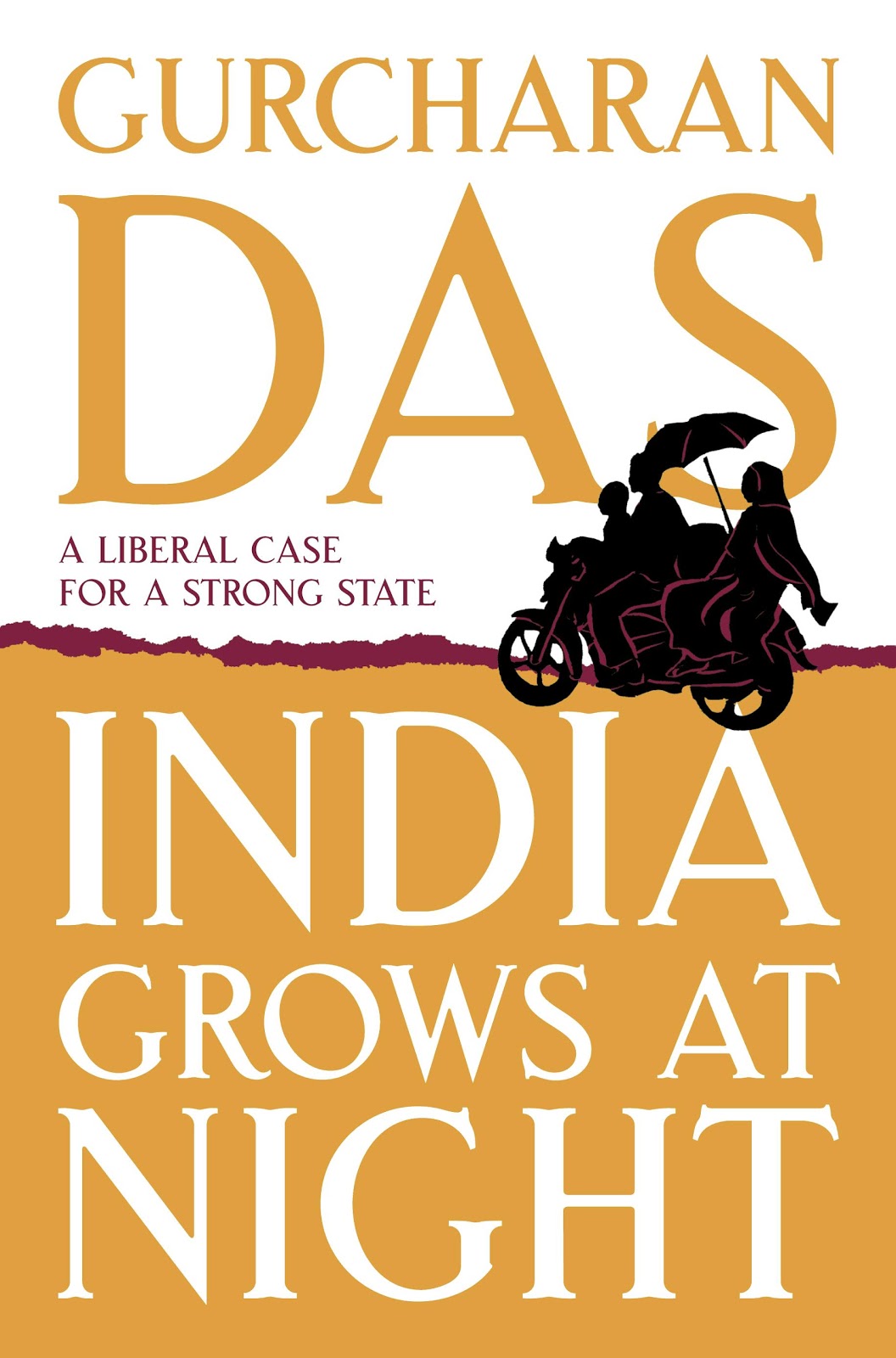
Day 160: Book Excerpt: India Grows At Night


The troubled history of third world countries after the Second World War shows that state formation must precede nation-building and economic development, and not the other way around. The Government of India Act, 1935 was the starting point in forming the contemporary Indian state. India’s constitution makers were so impressed with its liberal nature that they took almost 250 articles verbatim from it and inserted them into their new Constitution. But the state that has emerged is not a European import. It has been built on the day-to-day practice under the bright Indian sun for over eight decades after 1860 of a liberal rule of law, and four decades of gradual parliamentary growth. Two, it contains the legacy of Mughal rule which influenced some British colonial institutions that continue till today. Three, it follows the classical conception of the Indian state whose main purpose is to protect the ‘ordered heterogeneity’ of Indian society. Despite the appearance of a centralized modern state, contemporary India is in fact loosely structured, segmentary, with considerable sharing of powers with the regional states. The regional kingdom was a central reality of Indian history and its contemporary expression is today’s linguistic state. Not unlike other subcontinental empires—Mauryas, Guptas, Mughals and the British—the Centre continues today to negotiate the proper relationship with the states through a ‘new federalism’. Four, it recognizes the pre-eminence of the primordial loyalties of a strong Indian society, which has always limited the potential for tyranny by the state, but also undercuts the individualism inherent in our liberal Constitution. While pushing for some social engineering via affirmative actions on behalf of the historically disadvantaged, the contemporary state, like the ancient Hindu king, also protects the customs of the heterogeneous, self-regulating orders of the diverse groups of Indian society as another expression of the ancient principle of ‘ordered heterogeneity’.
State formation is a continuing process. India’s has also been influenced positively by seventeen years of Jawaharlal Nehru’s rule and negatively by sixteen years of Indira Gandhi’s. Early on, it was impacted by the death of Subhas Chandra Bose in August 1945, who might have taken the state in an authoritarian direction. But also the demise of the decisive Sardar Vallabhbhai Patel in December 1950, who if he had lived longer might have set the tone for a stronger liberal state. Despite its flaws, I believe India is more than Ramachandra Guha’s ‘phipty phipty’ democracy. My Egyptian adventure made me realize that India does, indeed, offer lessons for aspiring democracies. It has kept generals out of politics, a thought uppermost in Egyptian minds but non-existent in Indian minds. Indians live together in peace with greater liberty than in almost any other developing nation. The nation is secular and plural and has given space to the minorities and the low castes, and they do not feel insecure. And over the last two decades it has also become a rapidly growing economy which is lifting millions out of poverty.
Some years ago, Fareed Zakaria, the Indian-American political commentator, coined the term ‘illiberal democracy’. The expression was designed to describe a class of states that did hold free and fair elections and saw an alternation of political parties but lacked many of the other attributes of liberalism—most important, they did not respect civil and political rights. There is no imminent danger of India joining the ranks of those states, and that too is an achievement. Democracy is now solidly anchored in India, and so a degree of accountability is assured. The trick is to make that accountability a daily, hourly reflex at all levels. Not easy!
INDIA’S CODE WORD
Some nations possess a code word which, like a key, unlocks their secrets. That word is ‘liberty’ in America’s case; Ă©galitĂ©, ‘equality’, in the case of France; for India it is ‘dharma’. Some of the best and the worst deeds in these nations can only be understood when seen in the light of these words. Dharma can mean many things as we have seen—duty, law, justice, righteousness—but mostly it is about doing the right thing. The ideal that still exists in the Indian imagination is of a ruler guided by dharma. The outraged reaction of the people to the corruption scandals in 2011 was: ‘Dharma has been wounded.’ Just as America’s founding fathers were obsessed with liberty, so were many of India’s founders attached to dharma, so much so that they placed the dharma chakra, ‘the wheel of dharma’, at the centre of the nation’s flag. They were clear that the nation-building project was a profoundly moral one.
Like P.V. Kane, I too regard the Constitution as a ‘dharma text’ and this is where I began my quest for a strong, liberal state. India’s code word is important to my project. Fixing India’s democracy entails not only the reform of institutions but also the moral core underlying our democracy. It requires a change in people’s mindset, what we have been referring to as ‘habits of the heart’. Early on in the freedom struggle, Mohandas Gandhi discovered that the liberal language of western constitutional morality did not resonate in a deeply traditional society. But the moral language of dharma did. So, like a consummate myth-maker, he resuscitated the universal ethic of sadharana dharma from the dharma texts. His project was not unlike that of the Buddhist emperor Ashoka in the third century BCE, who had also embarked on a programme to build ‘habits of the heart’ based on ‘dhamma’ (dharma in Pali), consisting of edicts which he had engraved on pillars throughout his empire. Both men understood that nation-building entails myth-making. Gandhi was surprised to find how quickly his ‘dharma campaign’ resonated with the masses. He may not have been able to end untouchability but he did breathe life into the movement for freedom, which had hitherto been a forum for westernized debating.
It may seem strange to want to invoke tradition, especially when that tradition has been responsible for so much unjust hierarchy and social injustice. But it is a question of how one reads the past. Nation builders and revolutionaries have always known that history is ever ready to be used in the service of the future. Gandhi was aware that dharma is a pliable concept. So, he deliberately side-stepped the hierarchical concept of svadharma and the social concept of duties specific to one’s caste, and evoked instead the universal values of sadharana dharma. This sadharana dharma, as already discussed, is no ‘respecter of persons’, and is consistent with the ideal of ‘blindfolded’ justice conceived in our Constitution. Dharma, after all, has given coherence to people’s lives for centuries, reduced uncertainty and provided the self-restraint needed for a successful polity. By appealing to tradition, I am deliberately trying to break the present divide in India between the vast majority of the Indian people who are religious and lead traditional lives and modern secularists, especially of the left, who tend to dub such religious people as superstitious, bigoted and communal.

~~India Grows At Night -by- Gurcharan Das

Wednesday, January 20, 2016

Day 157: Book Excerpt: The Art-Architecture Complex


We enter a dark space to the whirr of a sixteen-millimeter film projector, and a pencil of white light cuts across the empty room to a distant wall. It registers as a dot, yet slowly the dot becomes an arc, and a small section of a cone is carved out of the space. As the thirty minutes of the film elapse, the arc grows into a circle, and a full cone of light is described in the room; then the process begins again. During the time of this describing we cannot help but touch the light as though it were a solid and investigate the cone as if it were a sculpture—cannot help but move in, through, and around the projection as though we were its partner, even its subject. Such is the experience of Line Describing a Cone (1973) by Anthony McCall, a classic of “structural film.”
Fast-forward thirty-three years. Again we enter a dark space, but there is no sound, as the projector, now digital, is silent. There are two such machines, located above us, with the projected figure, also double, on the floor at our feet. This figure is far more complex than a line describing a cone: it has no obvious beginning or end, and its development cannot be readily anticipated; in fact it can scarcely be understood. As a result, over the sixteen minutes of this projection, we tend to observe the tracing on the floor more assiduously than we do with a horizontal piece like Line Describing a Cone, in order to tease out the logic of its configuration in time, a logic that also defines the moving veils of light that fall from above—though we know this correlation more than perceive it. Gradually (it requires more than one iteration), we see that one of the two figures is an ellipse that contracts and expands while the other figure, a wave, travels toward it; there is also a line that rotates through the wave, complicating both forms. At the same time a very slow filmic wipe connects the two figures such that the one is always eclipsing the other, making breaks, which produce apertures in the veils of light, and forging connections, which produce closures, in the process. Gradually, too, we see that, in the course of a cycle, one figure turns into the other: ellipse becomes wave and vice versa. This is the experience of Between You and I (2006), one of several vertical projections McCall has made since 2004.
Between the first series of films represented by Line and the second represented by Between, there was a long hiatus in this work (largely due to the falling away of support for structural film in the art world of the 1980s and 1990s); nonetheless, McCall calls them all “solid-light films.” Solid light is a beautiful paradox, one that conjures up the old debate about its nature (i.e. is light a particle or a wave?), and McCall invites us to play with the paradox—to touch the projections as if they were material even as our hands pass through them with ease, to see the volumes as solids even though they are nothing but light. The play is sensuous, to be sure, but it is also cognitive, for we are prompted to ask (as McCall does, rhetorically, here), “Where is the work? Is the work on the wall [or the floor]? Is the work in space? Am I the work?”
In effect this is also to ponder, “What is the medium?” It is film, evidently enough, but film denatured, stripped bare, reduced to projected light in darkened space. At the same time film is expanded here, in the sense that it is made both to draw lines and to sculpt volumes. In the process it is also questioned, particularly in the recent projections, which are digital and so, technically speaking, not filmic at all (they have none of the slight flicker of the early pieces, for example); the vertical pieces disrupt the horizontal orientation of cinema as well. “I was certainly always searching for the ultimate film, one that would be nothing but itself,” McCall has recalled, and this ambition is in keeping with the modernist project of artistic reflexivity and autonomy. Finally, however, what is disclosed here is less any essence of film than the recognition that mediums do not operate in this way—that they are not so many nuts to crack, with a meat to eat and a shell to discard, but a matrix of technical conditions and social conventions in a differential relation to the other arts. Thus this search for the “ultimate film” implicates other mediums, too, which, like Richard Serra and others before him, McCall shows to be arrayed in an aesthetic field, one that significant practice always works to reconfigure and to renew.
Of course, the first art implicated here is cinema, even though McCall pares away most of the attributes associated with it, not only illusionistic space and fictional narrative but also the spectatorial precondition of this imaginary “elsewhere” (as he calls it)—that is, the viewer fixed in place (seated in fact), with eyes locked on the screen, and mostly oblivious to apparatus, ambience, and audience alike (the cone of projected light in particular). It is “the first film to exist in real, three-dimensional space,” McCall has asserted of Line, and it “exists only in the present.” This here-and-now-ness holds for his other films as well, and yet, as suggested, the effect is not to deliver film into a stable state of autonomous purity but to place it in correspondence with various arts—cinema first (especially in the horizontal projections), then sculpture (especially in the vertical projections), but other mediums and disciplines, too.
“The body is the important measure,” McCall says of the dimensions of his projections. Not only do they assume its scale, but they also incite us to move with the light—to play and/or to experiment with it—as it moves in turn; again, we interact with a McCall film as though we were somehow its subject. This bodily reference is one key connection with sculpture; another is that the films also carve volumes out of space. Non-traditional genres are elicited as well; for example, when the projectors engage the floor, the films implicate installation, too. On this score, beyond sculpture and installation, the solid-light films invite us to think about the architectural parameters of the given venue, which they both obscure and illuminate in ways that make us sense the space haptically as well as optically—that is, to feel our way around it with our hands out and our eyes wide open. One could say more about the rapport of the projections with other disciplines. Again, just as the films sculpt space, they also trace lines, and so implicate drawing as well. In fact they are drawings in light, literal photo-graphs in motion (which is, after all, what film is), and so photography is also engaged. In many ways the great pleasure afforded by the work comes as we move from an experiencing of the different phenomenologies of these media to a puzzling over their provisional ontologies and back again. Sensuous and cognitive, the space of the solid-light films is thus philosophical, too.

~~The Art-Architecture Complex -by- Hal Foster

Monday, January 18, 2016

Day 155: Book Excerpt: Collapse


Japan’s long history of scientific forest management is not well known to Europeans and Americans. Instead, professional foresters think of the techniques of forest management widespread today as having begun to develop in German principalities in the 1500s, and having spread from there to much of the rest of Europe in the 1700s and 1800s. As a result, Europe’s total area of forest, after declining steadily ever since the origins of European agriculture 9,000 years ago, has actually been increasing since around 1800. When I first visited Germany in 1959, I was astonished to discover the extent of neatly laid-out forest plantations covering much of the country, because I had thought of Germany as industrialized, populous, and urban.
But it turns out that Japan, independently of and simultaneously with Germany, also developed top-down forest management. That too is surprising, because Japan, like Germany, is industrialized, populous, and urban. It has the highest population density of any large First World country, with nearly 1,000 people per square mile of total area, or 5,000 people per square mile of farmland. Despite that high population, almost 80% of Japan’s area consists of sparsely populated forested mountains, while most people and agriculture are crammed into the plains that make up only one-fifth of the country. Those forests are so well protected and managed that their extent is still increasing, even though they are being utilized as valuable sources of timber. Because of that forest mantle, the Japanese often refer to their island nation as “the green archipelago.” While the mantle superficially resembles a primeval forest, in fact most of Japan’s accessible original forests were cut by 300 years ago and became replaced with regrowth forest and plantations as tightly micromanaged as those of Germany and Tikopia.
Japanese forest policies arose as a response to an environmental and population crisis paradoxically brought on by peace and prosperity. For almost 150 years beginning in 1467, Japan was convulsed by civil wars as the ruling coalition of powerful houses that had emerged from the earlier disintegration of the emperor’s power in turn collapsed, and as control passed instead to dozens of autonomous warrior barons (called daimyo), who fought each other. The wars were finally ended by the military victories of a warrior named Toyotomi Hideyoshi and his successor Tokugawa Ieyasu. In 1615 Ieyasu’s storming of the Toyotomi family stronghold at Osaka, and the deaths by suicide of the remaining Toyotomis, marked the wars’ end.
Already in 1603, the emperor had invested Ieyasu with the hereditary title of shogun, the chief of the warrior estate. From then on, the shogun based at his capital city of Edo (modern Tokyo) exercised the real power, while the emperor at the old capital of Kyoto remained a figurehead. A quarter of Japan’s area was directly administered by the shogun, the remaining three-quarters being administered by the 250 daimyo whom the shogun ruled with a firm hand. Military force became the shogun’s monopoly. Daimyo could no longer fight each other, and they even needed the shogun’s permission to marry, to modify their castles, or to pass on their property in inheritance to a son. The years from 1603 to 1867 in Japan are called the Tokugawa era, during which a series of Tokugawa shoguns kept Japan free of war and foreign influence.
Peace and prosperity allowed Japan’s population and economy to explode. Within a century of the wars’ end, population doubled because of a fortunate combination of factors: peaceful conditions, relative freedom from the disease epidemics afflicting Europe at the time (due to Japan’s ban on foreign travel or visitors: see below), and increased agricultural productivity as the result of the arrival of two productive new crops (potatoes and sweet potatoes), marsh reclamation, improved flood control, and increased production of irrigated rice. While the population as a whole thus grew, cities grew even faster, to the point where Edo became the world’s most populous city by 1720. Throughout Japan, peace and a strong centralized government brought a uniform currency and uniform system of weights and measures, the end of toll and customs barriers, road construction, and improved coastal shipping, all of which contributed to a trade boom within Japan.
But Japan’s trade with the rest of the world was cut to almost nothing. Portuguese navigators bent on trade and conquest, having rounded Africa to reach India in 1498, advanced to the Moluccas in 1512, China in 1514, and Japan in 1543. Those first European visitors to Japan were just a pair of shipwrecked sailors, but they caused unsettling changes by introducing guns, and even bigger changes when they were followed by Catholic missionaries six years later. Hundreds of thousands of Japanese, including some daimyo, became converted to Christianity. Unfortunately, rival Jesuit and Franciscan missionaries began competing with each other, and stories spread that friars were trying to Christianize Japan as a prelude to a European takeover.
In 1597 Toyotomi Hideyoshi crucified Japan’s first group of 26 Christian martyrs. When Christian daimyo then tried to bribe or assassinate government officials, the shogun Tokugawa Ieyasu concluded that Europeans and Christianity posed a threat to the stability of the shogunate and Japan. (In retrospect, when one considers how European military intervention followed the arrival of apparently innocent traders and missionaries in China, India, and many other countries, the threat foreseen by Ieyasu was real.) In 1614 Ieyasu prohibited Christianity and began to torture and execute missionaries and those of their converts who refused to disavow their religion. In 1635 a later shogun went even further by forbidding Japanese to travel overseas and forbidding Japanese ships to leave Japan’s coastal waters. Four years later, he expelled all the remaining Portuguese from Japan.

~~Collapse: How Societies Choose To Fail or Succeed -by- Jared Diamond

Friday, January 15, 2016

Day 152: Book Excerpt: Writing On The Wall


There is something unusual about primates in general, and humans in particular. Compared with other animals, they have strikingly large brains relative to their bodies. Moreover, most of the extra brain volume is devoted to one part of the brain in particular: the neocortex, which is involved in higher functions such as spatial reasoning, sensory perception, and conscious thought. In most mammals the neocortex accounts for 30 to 40 percent of brain volume, but the proportion is over 65 percent in many primates, and 80 percent in humans. What is this large neocortex for?

One possibility is that primates evolved larger brains to enable them to use more complex tools, or to improve their ability to solve problems when searching for food, by doing things like cracking open nuts or extracting termites from their nests. The problem with this theory is that some primates with relative small neocortices (such as the aye-aye, a type of lemur found in Madagascar) display such “extractive foraging” behavior, while others with much larger neocortices (such as macaques) do not. And many nonprimates with much smaller neocortices, such as crows, are capable of solving complex problems. So that cannot be what the neocortex is for.

Another theory is that the large neocortex might have evolved to allow primates to build larger mental maps of their surroundings, to improve their ability to find food. But there turns out to be no correlation between neocortex volume and the range over which primates forage, or the average distance they travel each day. Nor do fruit was deeply unpopular, b-eating primates, which must constantly keep track of dispersed, short-lived supplies of food, have larger neocortices than leaf-eaters. So the neocortex was evidently not evolved for mapping the physical environment, either.

The odd thing is that all primates, not just those that use tools or solve complex problems, have disproportionately large brains. A large brain is expensive to develop and maintain. An adult human brain accounts for 2 percent of body mass, on average, but consumes around 20 percent of total energy intake. So there must something valuable that primates do that requires lots of extra mental processing capacity.

Along with their large brains, another distinguishing feature of primates is their social nature: they live in groups and have unusually complex social systems. They can form coalitions with their peers, for example, and are capable of deliberate deception, which requires the ability to hypothesize about another individual’s view of the world. Living in a group is safer than living alone, because there are more eyes to spot predators and more hands to fend off rivals. But individual members must be able to balance their own needs with those of the group as a whole, rather than just looking out for themselves. Group members have to cooperate with others, understanding and anticipating their needs, while also establishing and managing their own positions within the ever-shifting pattern of alliances within the group.

In primates, these alliances are maintained through a process known as social grooming, which is carried out in pairs or small subgroups called coalitions. At its simplest level, this involves removing insects, parasites, or dirt from another individual’s fur. But primates spend far more time grooming than is necessary for purely hygienic reasons: for some species, as much as 20 percent of their waking hours. They do so in part because grooming is a pleasurable activity. Being groomed causes the release of beta-endorphins, which are natural opiates produced by the brain, resulting in a lower heart rate, a reduction in nervous behavior such as scratching, and a pleasant sense of relaxation. After being groomed, an individual will usually return the favor. Primates use social grooming to build strong bonds with a few other members of their group. They can also send social signals through the choices they make about which individuals they groom, how long they do it for, and which other individuals they allow to watch.

The time spent grooming is a worthwhile investment, because members of a grooming coalition will then support each other in several ways. They may gently steer a member of their coalition away from rivals in the wider group in order to minimize stress. If an individual is threatened by another group member, members of his grooming coalition will come to his aid. An individual can then face down an adversary, provided he has powerful enough allies to call upon. Group members may switch their allegiance from one coalition to another within the group if they believe it will improve their access to food, mating partners, or other resources. The constant interplay between grooming coalitions helps resolve and prevent conflicts, knitting the group as a whole together and making all its members safer from predators.

~~Writing On The Wall: Social Media- The First 2000 Years -by- Tom Standage

Monday, November 9, 2015

Day 87 : Book Excerpt : Ideas: A History

Much more controversial, however, are the reasons for why agriculture developed, why it developed then, and why it developed where it did. This is clearly of major importance in understanding mankind’s mental development. It is also an even more interesting question than it looks when you consider the fact that the hunter-gathering mode is actually quite an efficient way of leading one’s life. Ethnographic evidence among hunter-gatherer tribes still in existence shows that they typically need to ‘work’ only three or four or five hours a day in order to provide for themselves and their kin. Skeletal remains of Stone Age farmers reveal more signs of malnutrition, infectious diseases and dental decay than those of their hunter-gatherer predecessors. Why, therefore, would one change such a set of circumstances for something different where one has to work far harder? In addition, reliance on grain imposed a far more monotonous diet on early humans than they had been used to in the time of hunting and gathering. In any case, when people first domesticated crops, these remained a minor part of the diet for centuries, possibly more than a thousand years. Again, why the change?

One theory is that the switch to agriculture was made for ritualistic or social reasons, because the new foods were rare luxuries, which gradually spread, the way designer goods do in our own day. Lentils, for example, grow just two per wild plant and would hardly have staunched the hunger of a Stone Age family. Yet lentils are among the first crops of the Near East. Some palaeontologists feel beer was the most important end-product of these grains, the importance of alcohol in a ritual feast being obvious.

But the most basic of the economic arguments stems from the fact that, as has already been mentioned, some time between 14,000 and 10,000 BP, the world suffered a major climatic change. This was partly a result of the end of the Ice Age which had the twin effects of raising sea levels and, in the warmer climate, encouraging the spread of forests. These two factors ensured that the amount of open land shrank quite dramatically, ‘segmenting formerly open ranges into smaller units and arranging the niches for different species by altitude and type of vegetation . . . Sedentism and the reduction of open range encouraged territoriality. People began to protect and propagate local herds, a pre-domestication practice that can be referred to as food resource management.’ A further aspect of this set of changes was that the climate became increasingly arid, and the seasons became more pronounced, a circumstance which encouraged the spread of wild cereal grasses and the movement of peoples from one environment to the next, in search of both plants and animal flesh. There was more climatic variety in areas which had mountains, coastal plains, higher plains and rivers. This accounts for the importance of the fertile crescent. Grasses were naturally prevalent in this Near Eastern region (wild stands of emmer and einkorn wheat, and barley, exist there to this day). But it is not difficult to work out what happened. ‘The harvested batch of seeds would be selected in favour of non-shattering and uniform maturation. As soon as humans began to sow the seeds they had harvested, they automatically – even if unintentionally – initiated a process of selection in favour of the non-shattering genotype.’

Mark Nathan Cohen is the most prominent advocate of the theory that there was a population crisis in pre-history and that it was this which precipitated the evolution of agriculture. Among the evidence he marshals to support his argument is the fact that agriculture is not easier than hunter-gathering, that there is a ‘global coincidence’ in the simultaneous extinction of mega-fauna, the big mammals which provided so much protein for early humans, a further coincidence that domestication emerged at the end of the Pleistocene Age, when the world warmed up and people became much more mobile, and that the cultivation of wild species, before agriculture proper, encouraged the birth of more children. It is well known, for instance, that nomads and hunter-gatherers control the number of children by not weaning them for two years. This limits the size of a group that is continually on the move. After the development of sedentism, however, this was no longer necessary, and resulted, says Cohen, in a major population explosion. Cohen also claims that evidence for a population crisis in antiquity can be inferred from the number of new zones exploited for food, the change in diet, from plants which need less preparation to those which need more, the change in diet from larger animals to smaller (because larger ones were extinct), the increasing proportion of remains of people who are malnourished, the specialisation of artefacts which had evolved to deal with rarer and rarer animals and plants, the increased use of fire, for cooking otherwise inedible foodstuffs, the increased use of aquatic resources, the fact that many plants, though available as food in deep antiquity, were not harvested until around 12,000 BP, that grass (cereals) is a low priority in food terms, and so on and so on, all of which Cohen contends is corroborated by archaeological excavation. For him, therefore, the agricultural revolution was not, in and of itself, a liberation for early humans. It was instead a holding action to cope with the crisis of overpopulation. Far from being an inferior form of life, the hunter-gatherers had been so successful they had filled up the world, insofar as their lifestyle allowed, and there was no place to turn.

It is another attractively simple hypothesis but there are problems with it. One of the strongest criticisms comes from Les Groube, who is the advocate of a rival theory. According to Groube, who is based in France, it is simply not true that the world of deep antiquity was in a population crisis, or certainly not a crisis of overpopulation. His argument is the opposite, that the relatively late colonisation of Europe and the Americas argues for a fairly thinly populated Earth. For Groube, as man moved out of Africa into colder environments, there would have been fewer problems with disease, simply because, from a microbial point of view, the colder regions were safer, healthier. For many thousands of years, therefore, early man would have suffered fewer diseases in such places as Europe and Siberia, as compared with Africa. But then, around 20,000 years ago, an important coincidence took place. The world started to warm up, and man reached the end of the Old World – meaning that, in effect, the known world was ‘full’ of people. There was still plenty of food but, as the world warmed up, many of the parasites on man were also able to move out of Africa. In short, what had previously been tropical diseases became temperate diseases as well. The diseases Groube mentions include malaria, schistosomiasis and hookworm, ‘a terrible trinity’. A second coincidence also occurred. This was the hunting to extinction of the mega-fauna, which were all mammals, and therefore to a large extent biologically similar to man. All of a sudden (sudden in evolutionary terms), there were far fewer mammals for the microbial predators to feast on – and they were driven to man.

~~Ideas: A History -by- Peter Watson

Wednesday, October 7, 2015

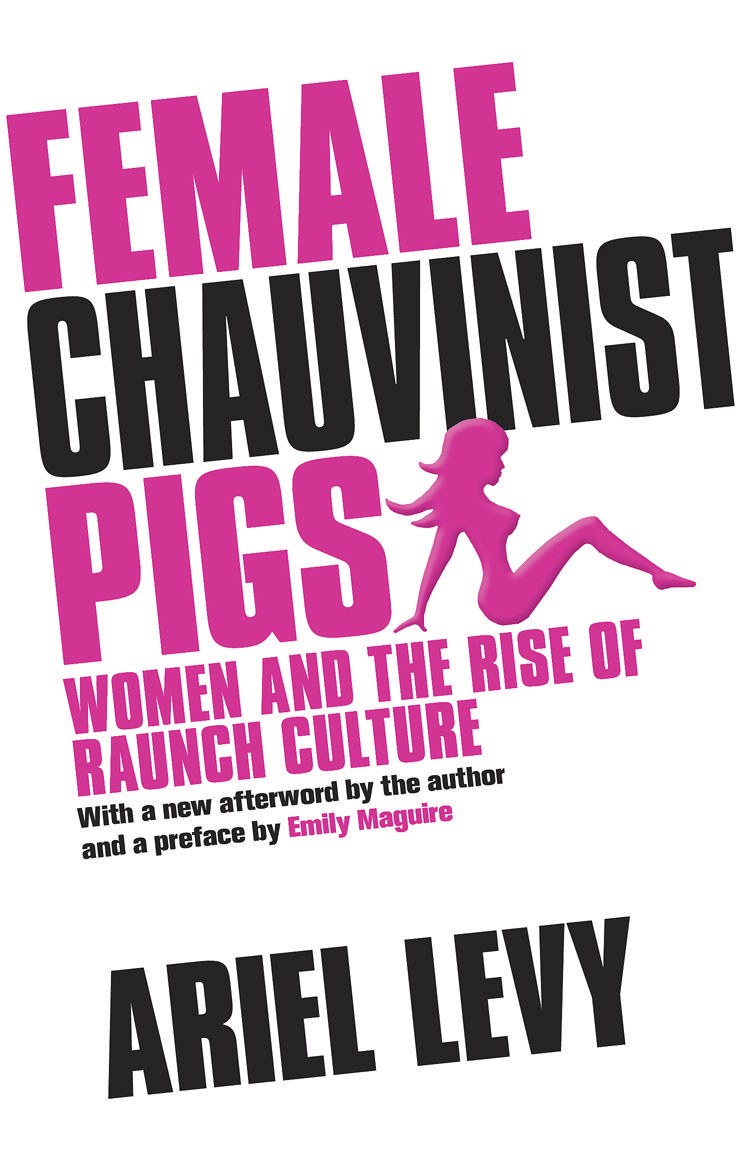
Day 54 : Book Excerpt : Female Chauvinist Pigs

Charlie’s Angels, the film remake of the quintessential jiggle show, opened at number one in 2000 and made $125 million in theaters nationally, reinvigorating the interest of men and women alike in leggy crime fighting. Its stars, who kept talking about “strong women” and “empowerment,” were dressed in alternating soft-porn styles—as massage parlor geishas, dominatrixes, yodeling Heidis in alpine bustiers. (The summer sequel in 2003—in which the Angels’ perilous mission required them to perform stripteases—pulled in another $100 million domestically.) In my own industry, magazines, a porny new genre called the Lad Mag, which included titles like Maxim, FHM, and Stuff, was hitting the stands and becoming a huge success by delivering what Playboy had only occasionally managed to capture: greased celebrities in little scraps of fabric humping the floor.

This didn’t end when I switched off the radio or the television or closed the magazines. I’d walk down the street and see teens and young women—and the occasional wild fifty-year-old—wearing jeans cut so low they exposed what came to be known as butt cleavage paired with miniature tops that showed off breast implants and pierced navels alike. Sometimes, in case the overall message of the outfit was too subtle, the shirts would be emblazoned with the Playboy bunny or say PORN STAR across the chest.

Some odd things were happening in my social life, too. People I knew (female people) liked going to strip clubs (female strippers). It was sexy and fun, they explained; it was liberating and rebellious. My best friend from college, who used to go to Take Back the Night marches on campus, had become captivated by porn stars. She would point them out to me in music videos and watch their (topless) interviews on Howard Stern. As for me, I wasn’t going to strip clubs or buying Hustler T-shirts, but I was starting to show signs of impact all the same. It had only been a few years since I’d graduated from Wesleyan University, a place where you could pretty much get expelled for saying “girl” instead of “woman,” but somewhere along the line I’d started saying “chick.” And, like most chicks I knew, I’d taken to wearing thongs.

What was going on?
...
What was almost more surprising than the change itself were the responses I got when I started interviewing the men and—often—women who edit magazines like Maxim and make programs like The Man Show and Girls Gone Wild. This new raunch culture didn’t mark the death of feminism, they told me; it was evidence that the feminist project had already been achieved. We’d earned the right to look at Playboy; we were empowered enough to get Brazilian bikini waxes. Women had come so far, I learned, we no longer needed to worry about objectification or misogyny. Instead, it was time for us to join the frat party of pop culture, where men had been enjoying themselves all along. If Male Chauvinist Pigs were men who regarded women as pieces of meat, we would outdo them and be Female Chauvinist Pigs: women who make sex objects of other women and of ourselves.

When I asked female viewers and readers what they got out of raunch culture, I heard similar things about empowering miniskirts and feminist strippers, and so on, but I also heard something else. They wanted to be “one of the guys”; they hoped to be experienced “like a man.” Going to strip clubs or talking about porn stars was a way of showing themselves and the men around them that they weren’t “prissy little women” or “girly-girls.” Besides, they told me, it was all in fun, all tongue-in-cheek, and for me to regard this bacchanal as problematic would be old-school and uncool.

I tried to get with the program, but I could never make the argument add up in my head. How is resurrecting every stereotype of female sexuality that feminism endeavored to banish good for women? Why is laboring to look like Pamela Anderson empowering? And how is imitating a stripper or a porn star—a woman whose job is to imitate arousal in the first place—going to render us sexually liberated?

Despite the rising power of Evangelical Christianity and the political right in the United States, this trend has only grown more extreme and more pervasive in the years that have passed since I first became aware of it. A tawdry, tarty, cartoonlike version of female sexuality has become so ubiquitous, it no longer seems particular. What we once regarded as a kind of sexual expression we now view as sexuality. As former adult film star Traci Lords put it to a reporter a few days before her memoir hit the best-seller list in 2003, “When I was in porn, it was like a back-alley thing. Now it’s everywhere.” Spectacles of naked ladies have moved from seedy side streets to center stage, where everyone—men and women—can watch them in broad daylight. Playboy and its ilk are being “embraced by young women in a curious way in a postfeminist world,” to borrow the words of Hugh Hefner.

But just because we are post doesn’t automatically mean we are feminists. There is a widespread assumption that simply because my generation of women has the good fortune to live in a world touched by the feminist movement, that means everything we do is magically imbued with its agenda. It doesn’t work that way. “Raunchy” and “liberated” are not synonyms. It is worth asking ourselves if this bawdy world of boobs and gams we have resurrected reflects how far we’ve come, or how far we have left to go.

~~Female Chauvinist Pigs: Women and The Rise of Raunch Culture -by- Ariel Levy

Thursday, October 1, 2015

Day 48 : Book Excerpt : Iranian Rappers and Persian Porn

Hamadan is steeped in history and was founded, according to legend, by the mystical King Jamshid. It has been inhabited for at least four thousand years and was the capital city for the Median Empire (750-550 BC). It was subsequently the summer capital of the Achaemenids (550-330 BC) and was known as Hagmataneh or “the meeting place.” In its heyday, Hamadan was one of the world’s great cities, containing exquisite palaces decorated lavishly in precious metals. However, all this wealth caught the eye of numerous invaders, and with these its importance as a city slowly diminished.

It began its decline after the Arab conquest of the midseventh century, but was restored as the region’s capital for sixty odd years under the Seljuks in the twelfth century. The Mongols weren’t so good to the place and smashed it up good and proper in 1220, as did the Tamerlanes in 1386. After this, it regained some of its former affluence and enjoyed a period of stability until the eighteenth century when the Turks decided to invade.

Until recently, Hamadan had a large Jewish community, which had been in the city since the fifth century BC. This community, like the city itself, has declined dramatically and is now apparently down to no more than thirty-five people. Hamadan contains Iran’s most significant Jewish pilgrimage site, which is a shrine said to hold the remains of Esther, the Jewish wife of Achaemenid King Xerxes I. The Old Testament Book of Esther is named after her, and, along with the books of Ezra, Nehemiah, and Daniel, paints a favorable picture of the relationship between the Jews and the ancient Persian Achaemenid Empire.

I was in Hamadan, like most Iranian tourists, to use it as a base to visit the famous Ali Sadr Caves some sixty miles from here. The caves sounded awesome and had only been discovered some forty years ago by a local shepherd wandering about in search of a lost goat. What the lucky chap stumbled upon was a spectacular series of caves containing vast clear lakes and rivers. It had been surveyed in 2001 by a joint German and British geological team who recorded a total of seven miles of chambers, but there are probably far more as of yet undiscovered.
...
I purchased a ticket and walked to the entrance of the cave. The blessed coolness of the air was the first thing that hit me as I walked down a gradual flight of steps into the opening chamber containing a massive underground lake. Here a long jetty-like platform hugged the water’s edge and two paddleboats waited for passengers. This was clearly where the crowds must have queued on busy days but today, mercifully, there was just a single family and me. I couldn’t believe my luck.

We all had to put on lifejackets, which for the family’s little daughter of about four was nearly as big as she was. We got in the boat, which was connected with a rope to a paddleboat operated by a young guy of about fourteen. A guide joined our boat and slowly we moved off. The water was a shimmering green color, and the clearest I’d ever seen in my life. Looking over the boat’s edge, I could see an immensely long way down into the water, which was as deep as forty-five feet. Strangely, nothing lives in the water or in the caves themselves. Even bats don’t inhabit the place, and there is no evidence of human or animal activity in the caves over the centuries.

We slowly drifted past otherworldly rock formations, which our guide described in Farsi only, leaving me to ponder them myself without explanation. I preferred it that way. Hanging down from sections of the cave’s stalactite-covered roof were labels for some of the larger formations, identifying them with appropriate titles such as “Statue of Liberty,” etc. These were accompanied by separate placards containing quotes from the Koran. I was mesmerized as we drifted slowly along.

The lighting was just enough to reveal the cave’s grandeur but not so bright as to illuminate every nook and cranny and take away any of its mystique. We glided gently past many interconnecting chambers, all filled with the same clear water. Some looked like mystical and holy grottos, others like the hidden underground lair for a James Bond criminal’s secret submarine. We drifted along for about thirty minutes, passing only one other boat going the opposite way, before arriving at another little jetty where a walkway led into the center of the caves. Here we disembarked. I let the family go first, not out of good manners but to give them a few minutes head start so I could walk around in complete silence.

It was simply wonderful and I felt a reverence for the place. That is until I got to a little café playing music. I quickly skipped past this and came face-to-face with the most awe-inspiring chamber. It was 131 feet high and had a jagged boulder protruding from its roof. Strewn all around were the remains of many other boulders from partial collapses over the millennia. I stood in this cathedral-like inner chamber and truly felt as if I were in the center of the earth.


~~Iranian Rappers and Persian Porn -by- Jamie Maslin

Monday, September 21, 2015

Day 38: Book Excerpt: The Unwanted Sound of Everything we Want


One of my favorite depictions of noise comes from Kiran Desai’s 2006 novel, The Inheritance of Loss. Desai is a master of description who can create an unforgettable image with just a sentence or two; in her hands the graffiti inside a gum-studded Manhattan phone booth becomes “the sick sweet roting mulch of the human heart.” When her character Biju, a young Indian immigrant, encounters New York taxicabs, she writes,

    They harassed Biju with such blows from their horns as could split the world into whey and solids: paaaaaawww!

Obviously Desai does not require typographical gimmicks to create vivid impressions. Having those taxi horns “split the world into whey and solids” is impressive enough. Nevertheless, she chooses to break up the uniformity of her typeface and to have one nonword stand out amid scores of carefully wrought sentences, outrageously demanding our attention, because that is exactly what noise does.

Of course, noise does not have to be loud to have that effect. Harold Pinter’s darkly comic play The Homecoming contains a passage about the ticking of a clock during a sleepless night. Says his character Lenny:

 “All sorts of objects, which, in the day, you wouldn’t call anything but commonplace. They give you no trouble. But in the night any given one of a number of them is liable to start letting out a bit of a tick.” It’s possible Lenny suffers from hyperacusis, a condition in which certain sounds are perceived as painfully loud, though he has other troubles to keep him on edge. It’s also possible that someone else would be reassured by the ticking. In a song by rock group Death Cab for Cutie, comfort comes from the sound of a leaky faucet.

Noise does not even have to originate from an acoustical source. If Lenny was one of the millions of people who suffer from tinnitus (50 million in the United States alone, of whom at least 12 million have symptoms serious enough to require medical intervention), he might hear a ringing or buzzing in his ears, or a sound like crickets, a constant hiss, or an unceasing roar. He might hear it even if he were deaf.

Some people are not satisfied with calling noise “unwanted sound.”

One of them is Les Blomberg, founder and director of the Noise Pollution Clearinghouse in Montpelier, Vermont. Out of his small two-person office, to which he travels each day by bike, Blomberg maintains what is probably the largest accessible noise-related database in the world. For Blomberg noise is best defined by the name of his organization: It’s a pollutant. “Do we define air pollution as ‘unwanted particulates’?” he once asked me. On another occasion, he said that if he could go back and name his organization all over again, he’d get rid of the word noise.

With degrees in both physics and philosophy, Les Blomberg is the first person who helped me to understand noise as more than an annoyance. Though Blomberg’s interest in noise began when he was awakened by garbage trucks emptying dumpsters in his neighborhood at 4:00 in the morning, he claims not to be among the 12 to 15 percent of the general population who are acutely noise sensitive. For him noise is not “personal” the way it is for many anti-noise activists, but it is serious—too serious to be defined as “unwanted sound.”

Defining noise in this way is relatively new, Blomberg told me. It dates from the early decades of the twentieth century, when scientists and engineers were developing the electronic communication devices that would determine so much of our modern acoustic environment. (For a history of this period he referred me to Emily Thompson’s fascinating The Soundscape of Modernity 1900-1933.) To these experts, noise was primarily interference, static. It was a technical problem rather than a health issue or a social injustice. Ironically, this highly technical agenda gave us what Blomberg regards as an overly subjective definition. “Do we really want desire in science?”

To make his point, Blomberg gave the illustration of a kid who loses some of his hearing at a rock concert, something people have been doing in spite of repeated warnings for well over a generation. Rock concerts can reach sound levels in excess of 120 decibels, the equivalent of a jet at takeoff. (By way of comparison, the Occupational Safety and Health Administration requires that hearing protection be worn by workers with prolonged exposure to sounds exceeding 85 dB.) Most of us would say that the kid in Blomberg’s example was partially deafened by noise. But can we say that he was deafened by “unwanted sound” when he wanted to go to the concert, paid a lot of money to go, and may also have wanted it to be loud?

Probably he wants his MP3 player to be loud as well, a preference that has been blamed for contributing to the hearing losses of some 5 million children in the United States. As of now, one American child in eight has noise-induced hearing loss. Effects like these are trivialized, in Blomberg’s view, when we define noise in terms of desire.

~~The Unwanted Sound of Everything we Want -by- Garret Keizer

Friday, September 18, 2015

Day 35: Book Excerpt: The Bonobo and the Atheist

Animals crawling out of the mud recall our lowly beginnings. Everything started simple. This holds not only for our bodies—with hands derived from frontal fins and lungs from a swim bladder—but equally for our mind and behavior. The belief that morality somehow escapes this humble origin has been drilled into us by religion and embraced by philosophy. It is sharply at odds, however, with what modern science tells us about the primacy of intuitions and emotions. It is also at odds with what we know about other animals. Some say that animals are what they are, whereas our own species follows ideals, but this is easily proven wrong. Not because we don’t have ideals, but because other species have them, too.

Why does a spider repair her web? It’s because she has an ideal structure in mind, and as soon as her web deviates from it, she works hard to bring it back to its original shape. How does a “Mama Grizzly” keep her young safe? Anybody moving between a sow and her cubs will discover that she has an ideal configuration in mind, which she doesn’t like to be messed with. The animal world is full of repair and correction, from disturbed beaver dams and anthills to territorial defense and rank maintenance. Failing to obey the hierarchy, a subordinate monkey upsets the accepted order, and all hell breaks loose. Corrections are by definition normative: they reflect how animals feel things ought to be. Most pertinent for morality, which is also normative, social mammals strive for harmonious relationships. They are at pains to avoid conflict whenever they can. The gladiatorial view of nature is plainly wrong. In one field experiment, two fully grown male baboons refused to touch a peanut thrown between them, even though they both saw it land at their feet. Hans Kummer, the Swiss primatologist who worked all his life with wild hamadryas baboons, describes how two harem leaders, finding themselves in a fruit tree too small to feed both of their families, broke off their inevitable confrontation by literally running away from each other. They were followed by their respective females and offspring, leaving the fruit unpicked. Given the huge, slashing canine teeth of a baboon, few resources are worth a fight. Chimp males face the same dilemma. From my office window, I often see several of them hang around a female with swollen genitals. Rather than competing, these males are trying to keep the peace. Frequently glancing at the female, they spend their day grooming each other. Only when everyone is sufficiently relaxed will one of them try to mate.

If fighting does break out, primates react the way the spider does to a torn web: they go into repair mode. Reconciliation is driven by the importance of social relationships. Studies on a great variety of species show that the closer two individuals are, and the more they do together, the more likely they are to make up after aggression. Their behavior reflects awareness of the value of friendships and family bonds. This often requires them to overcome fear or suppress aggression. If it weren’t for the need to bury the hatchet, it wouldn’t make any sense for apes to kiss and embrace former opponents. The smart thing to do would be to stay away from them.
This brings me back to my bottom-up view of morality. The moral law is not imposed from above or derived from well-reasoned principles; rather, it arises from ingrained values that have been there since the beginning of time. The most fundamental one derives from the survival value of group life. The desire to belong, to get along, to love and be loved, prompts us to do everything in our power to stay on good terms with those on whom we depend. Other social primates share this value and rely on the same filter between emotion and action to reach a mutually agreeable modus vivendi. We see this filter at work when chimpanzee males suppress a brawl over a female, or when baboon males act as if they failed to notice a peanut. It all comes down to inhibitions.
...
We are mammals, a group of animals marked by sensitivity to each other’s emotions. Even though I tend to favor primate examples, much of what I describe applies equally to other mammals. Take the work by the American zoologist Marc Bekoff, who analyzed videos of playing dogs, wolves, and coyotes. He concluded that canid play is subject to rules, builds trust, requires consideration of the other, and teaches the young how to behave. The highly stereotypical “play bow” (an animal crouches deep on her forelimbs while lifting her rear in the air) helps to set play apart from sex or conflict, with which it risks getting confused. Play ceases abruptly, though, as soon as one partner misbehaves or accidentally hurts the other. The transgressor “apologizes” by performing a new play bow, which may prompt the other to “forgive” the offense and continue to play. Role reversals make play even more exciting, such as when a dominant pack member rolls onto his back for a puppy, thus exposing his belly in an act of submission. This way, he lets the little one “win,” something he’d never permit in real life. Bekoff, too, sees a relation with morality:

    During social play, while individuals are having fun in a relatively safe environment, they learn ground rules that are acceptable to others—how hard they can bite, how roughly they can interact—and how to resolve conflicts. There is a premium on playing fairly and trusting others to do so as well. There are codes of social conduct that regulate what is permissible and what is not permissible, and the existence of these codes might have something to say about the evolution of morality.

~~The Bonobo and The Atheist -by- Frans De Waal